

If you’re working on finish-carpentry projects like baseboards, crown moulding, or tongue-and-groove paneling, you’ve likely landed on the debate: “16 gauge vs 18 gauge brad nailer.” A 16-gauge brad nailer is better for heavier and thicker materials, while an 18-gauge brad nailer suits delicate trim work. Both tools have distinct advantages depending on the type of material, application, and finish requirements. In this guide, we’ll dive deep into every aspect that differentiates them—so you can confidently decide which gauge nailer is best for your needs.
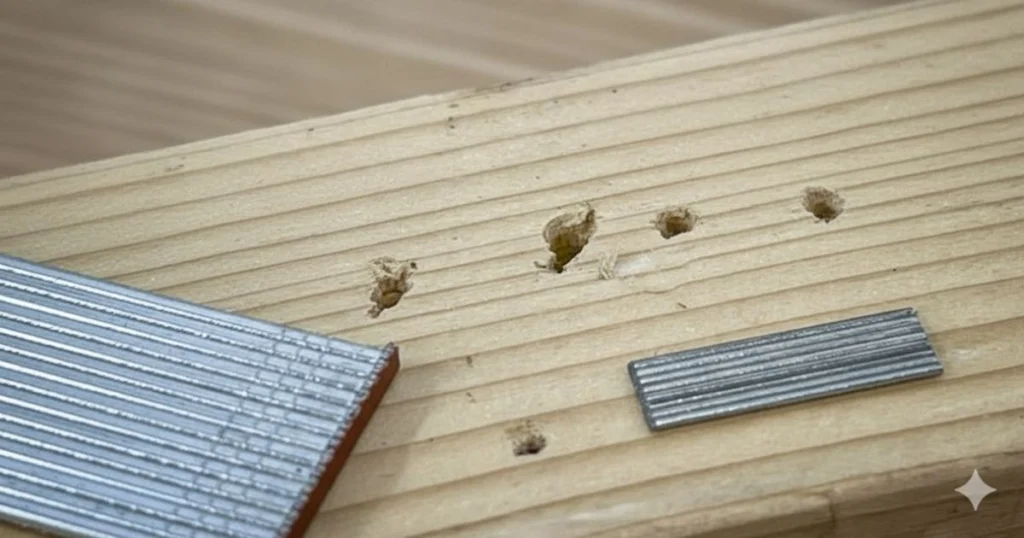
What do “gauge” numbers mean in nailers?
When people talk about “16 gauge vs 18 gauge,” they’re referring to the thickness of the nail (or brad) the gun shoots. A smaller gauge number means a thicker nail; conversely, a higher gauge means a thinner nail.
- An 18-gauge nail is thinner, leaves a smaller hole, and is often used for lighter finish work.
- A 16-gauge nail is thicker, has more holding power, but leaves a larger hole and demands a stronger nailer.
Understanding gauge is foundational before comparing tool for tool.
Why 16 or 18 gauge? And what about 15 vs 16 vs 18 gauge nailer?
If you glance at the spectrum of finish nailers, you’ll find 15-gauge, 16-gauge, 18-gauge (brads), 21-gauge, and 23-gauge pin nailers. Each has its sweet-spot application.
15-gauge: Often used for heavy trim, thick hardwoods, heavier mouldings.
16-gauge: A “sweet spot” for many trim carpentry jobs when you need good holding power without going overly large.
18-gauge: Generally used for lighter trim, thinner moulding, baseboards, or where minimal hole size is important.
When someone asks, “Should I get a 16 or 18 gauge nailer for baseboard?” or “15 vs 16 vs 18 gauge nailer,” they’re trying to balance two things: holding strength and finish look (hole size, less splitting).
16 Gauge Brad Nailer: The Heavy-Duty Finisher
A 16-gauge nailer is often referred to as a finish nailer, ideal for projects that demand strength and stability.
Key Features of a 16-Gauge Nailer
16 gauge brad nailers come with several standout features:
- Durability: Built to last and withstand heavy use. Uses nails with a diameter of 0.0625 inches.
- Power: Can penetrate harder materials with ease. However, it creates larger holes, requiring more filling.
- Precision: Ensures clean and accurate nailing.
- Versatility: Suitable for a wide range of projects. Typically supports nail lengths from 1 inch to 2.5 inches.
- Adjustable Depth: Allows for precise control over nail depth.
- Magazine Angle: Available in straight or angled magazine configurations for tight spaces
Best Uses
16 gauge brad nailers excel in the following applications:
- Trim Work: Perfect for installing baseboards, moldings, chair rails, and staircases.
- Cabinetry: Ideal for building and repairing cabinets.
- Furniture Making: Suitable for assembling furniture pieces.
- Hardwood Flooring: Great for securing hardwood planks, floor molding, and heavy trim.
- Door and Window Casigns: It is ideal for installing door and window casings.
- Framing: Useful for light framing tasks and repairs.
Because of their thicker profile, 16-gauge nails penetrate deeper and hold heavier materials firmly in place, making them a favorite for structural trim and load-bearing joints.
Pros
- Exceptional holding strength
- Suitable for thicker or denser wood
- Less likelihood of nail bending or breaking
- Works well with wood glue for permanent fixtures
Cons
- Leaves larger nail holes, requiring filling
- Not ideal for thin, delicate moldings
- Slightly heavier and bulkier tool body
18 Gauge Brad Nailer: The Finishing Touch Expert
The 18-gauge brad nailer—commonly known as a brad nailer—is designed for delicate and detailed finishing work. It uses thinner nails that are less likely to split wood, making it ideal for fine woodworking.
Key Features of an 18-Gauge Nailer
The 18 gauge brad nailer has several key features:
- Lightweight Design: Easier to handle and reduces user fatigue.
- Nail Size Range: Typically supports nails of diameter of 0.0475 inches and lenght from 5/8 inch to 2 inches.
- Versatility: Suitable for various light to medium woodworking projects.
- Minimal Surface Damage: Leaves small holes, requiring less filling.
- Adjustable Depth Control: Ensures nails are driven to the desired depth.
- Holding Power: It offers less holding power but greater aesthetic precision.
Best Uses
18 gauge brad nailers are perfect for:
- Trim Work: Attaching baseboards, decorative molding like crown molding, picture frame, or chair rails.
- Quarter-Round or Shoe Moldings: It helps to install Quarter-Round or Shoe Moldings easily without left any visibel marks.
- Cabinetry: Securing cabinet faces and frames.
- Furniture Building: Ideal for assembling drawers and other furniture parts.
- Craft Projects: Great for small wood crafts and detailed hobby projects.
- Paneling: Perfect for securing thin panels to surfaces and veneer work.
Pros
- Minimal surface damage
- Excellent for fragile materials
- Lightweight and maneuverable
- Requires less filling and sanding
Cons
- Limited holding power
- Not ideal for heavy or load-bearing joints
- Nails may back out in thicker materials
16 Gauge vs 18 Gauge: Key Differences
Let’s compare the two directly across several dimensions:
| Feature | 16-Gauge | 18-Gauge |
|---|---|---|
| Nail thickness / diameter | Thicker (0.0625 inch), more substantial holding power. | Thinner (0.0475 inch), less holding power, but leaves smaller holes. |
| Best suited for materials | Thicker trim, hardwoods, baseboard, heavier profiles. | Lighter trim, softwoods, small mouldings, where finish matters. |
| Hole size / cosmetic finish | Larger hole, may need more filler and finishing. | Smaller hole, easier to hide, less visible after painting. |
| Risk of splitting thin moulding | Higher risk when gauge is “too big” for thin profiles. | Lower risk of splitting thin or delicate trim. |
| Versatility for trim vs finish | More versatile for structural/trim hybrid work. | Best for pure finish work where strength demands are lower. |
| Weight of Tool | Heavier | Lightweight |
Practical Use-Cases: Where Each Gauge Wins
Let’s look at real-life scenarios to help you decide.
When to Use 18 Gauge (Brad Nailer)?
- You’re installing thin mouldings, shoe moulding, small trim pieces, or decorative bits where the hold doesn’t need to be extremely strong.
- You care deeply about minimal hole size and minimal filler work for painting.
- You’re working on furniture, small woodworking details, or paneling where the material is soft or thin.
Example: 16 or 18 gauge nailer for tongue and groove — for thinner tongue-and-groove boards, 18-gauge may suffice and will be less likely to split the boards.
When to Use 16 Gauge (Finish Nailer)?
- You’re installing baseboards, door/window casing, heavier hardwood trim, or any trim that needs stronger hold (especially if it will bear some stress).
- You’re working in renovation where you might get into less ideal substrates (plywood, MDF, old framing) and want more confidence in hold.
- The bigger hole left by the thicker nail is acceptable because you will fill, sand, paint anyway.
Example: 16 or 18 gauge nailer for baseboard — baseboards often are heavier, thicker, and may need more holding power, so 16-gauge wins.
Can You Use Both Nailers?
Absolutely. Many professionals and DIY enthusiasts keep both tools in their arsenal. The 16-gauge nailer covers structural and load-bearing needs, while the 18-gauge nailer excels at delicate finishing.
In fact, using both ensures:
- Strength where needed
- Flawless finishes where aesthetics matter
For example, you might secure baseboards with a 16-gauge nailer, then use an 18-gauge brad nailer for quarter-round trims on top.
What About 16 Gauge vs 18 Gauge Staples?
Though our main focus is on brad nailers, you’ll sometimes see staples used in finish work. The principle remains: gauge (thickness) matters. A 16-gauge staple will be heavier and have more holding power than an 18-gauge staple. If you’re comparing stapler vs nailer, or staple gauge vs nail gauge, the same tradeoff of strength vs finish holds. The nuance: staples can sometimes spread load differently, but for finish trim, gauge still matters.
In short: if you were doing heavy moulding with staples, go thicker gauge; if fine trim, thinner gauge.
What About 18 Gauge Nails in 16 Gauge Nailer?
This one is a tricky topic and important for safety and tool compatibility. Do not use 18-gauge nails in a 16-gauge nailer. Here’s why:
- The tool is designed and calibrated for a given shank thickness and diameter. Using a thinner shank nail means the gun may fail to seat properly, may mis-drive, can cause jams or mis-fires.
- The hole left would be larger than intended and the strength compromised.
- Generally manufacturers specify compatible nail gauge and lengths for a tool. Using outside spec is risky.
In short: match the tool to the nail gauge it was designed for. If you have a 16-gauge finish nailer, use 16-gauge nails. If you have an 18-gauge brad nailer, use 18-gauge nails. Don’t mix.
Milwaukee 16 Gauge vs 18 Gauge
If you’re looking at brands like Milwaukee, you’ll find they offer both 16-gauge finish nailers and 18-gauge brad nailers. The difference is exactly what we’ve discussed: gauge, application focus, and cost/weight/size trade-offs. When considering “Milwaukee 16 gauge vs 18 gauge,” ask:
- Which gauge fits my trim thickness and wood type?
- What is my need for holding power vs cosmetic finish?
- Will I be doing a lot of jobs where a thicker nail is necessary (baseboards, hardwood trim) or mostly lighter finish work (thin moulding, picture frames, paneling)?
Selecting one tool (or having both) can be guided by these questions. Some professionals will have both: a 16-gauge for heavier trim, an 18-gauge for the fine stuff.
Pneumatic vs Cordless Models
Both gauges come in pneumatic (air-powered) and cordless (battery or gas) options.
Pneumatic Nailers
- Require an air compressor
- Offer consistent power
- Best for high-volume professional use
Cordless Nailers
- More portable and convenient
- Ideal for on-site or quick repairs
- Slightly heavier due to the battery
Your choice depends on whether you prioritize mobility or continuous operation.
Summary: Which Should You Pick?
If you’re installing heavy baseboards or thick hardwood trim, use a 16-gauge. If you’re doing light moulding, thin trim or want minimal holes for painting, use an 18-gauge.
In more detail:
- Choose an 18-gauge brad nailer when your work is delicate, trim is thin, finish quality (small holes) is critical, and you don’t need massive holding strength.
- Choose a 16-gauge finish nailer when you’re dealing with heavier trim, hardwoods, baseboards, or situations where the nail needs to hold more.
- If budget and space allow, having both gives you maximum versatility (15 vs 16 vs 18 gauge narrative!).
- Ensure you match nail gauge to tool gauge—not mixing 18-gauge nails in a 16-gauge tool, for example.
Final Thoughts & Tips
- Tip-1: If you’re undecided and you’ll only buy one tool, lean toward 16-gauge for better versatility—but accept that you’ll be doing a bit more hole-filling. According to sources, “the 16-gauge model offers the best versatility” if you can only choose one.
- Tip-2: For very thin trim or delicate moulding (say shoe moulding, narrow casing), use an 18-gauge to avoid splitting and to get that near-invisible finish.
- Tip-3: Always use the correct length nails for your job (you may find 18-gauge nails go shorter in length than some finish nails).
- Tip-4: Consider the material: MDF, plywood, hardwood, pre-finished surfaces—all affect how strong the nail needs to be. Some woodworkers say 18-gauge “works well” for most trim, but acknowledge that for heavier trim they reached for 16-gauge.
- Tip-5: If you go with 16-gauge for baseboards, make sure you are comfortable with the finishing work—filling nail holes, sanding, prepping—because the holes are slightly larger.
- Tip-6: Review brands and look at motor/power, angle of nailer, and ease of use. Gauge isn’t the only factor—but in finish carpentry it’s one of the most important.
In Closing
Whether you’re asking “Which gauge should I use for baseboards?” (“16 or 18 gauge nailer for baseboard?”) or “Should I go with 16 gauge finish nailer or 18 gauge brad nailer for tongue and groove?” this article gives you the context to decide. Gauge matters. Strength matters. Finish matters. And your material, trim profile, and project scope will guide you.
FAQs 16 vs 18 Gauge Brad Nailer
Which Is Better, A 16 Gauge Or 18 Gauge Finish Nailer?
A 16 gauge finish nailer is better for heavy-duty projects needing stronger hold. An 18 gauge finish nailer is ideal for delicate, detailed work. Choose based on project requirements.
What Do You Use 16 Gauge Brad Nails For?
16 gauge brad nails are ideal for trim work, cabinetry, molding, and furniture assembly. They offer strong holding power and minimal splitting. Perfect for medium-duty tasks.
When Would You Use A 18 Gauge Nailer?
Use an 18 gauge nailer for trim work, baseboards, crown molding, and other delicate wood projects. It’s perfect for thin or fragile materials. Ideal for detailed finish work without splitting the wood.
What Is A 16 Gauge Nail Gun Used For?
A 16 gauge nail gun is used for trim work, baseboards, and crown molding. It’s ideal for medium-duty tasks.
Recent Posts
Woodworking is one of the most rewarding hobbies and professions, but it also comes with serious risks if proper precautions are not taken. Whether you're working with a table saw, planer, or simple...
What to Use If You Don't Have a Brad Nailer: Handy Alternatives
You can use a hammer and finishing nails paring with nail set or wood glue if you don't have a Brad Nailer. These tools effectively secure trim and small woodworking projects. So, if you’re in...