

Woodworking is one of the most rewarding hobbies and professions, but it also comes with serious risks if proper precautions are not taken. Whether you’re working with a table saw, planer, or simple hand tools, protecting yourself should always be your top priority. This is especially important in small workshops, where limited space, poor ventilation, and high dust concentration can increase the chances of accidents.
Using the right woodworking safety gear for small workshops can significantly reduce injuries and health hazards. From eye protection to respirators, every piece of protective equipment plays a vital role in keeping you safe while you work.
In this guide, you’ll learn about the essential woodworking safety gear every small workshop should have, along with practical safety tips and a checklist to help you maintain a safer workspace.
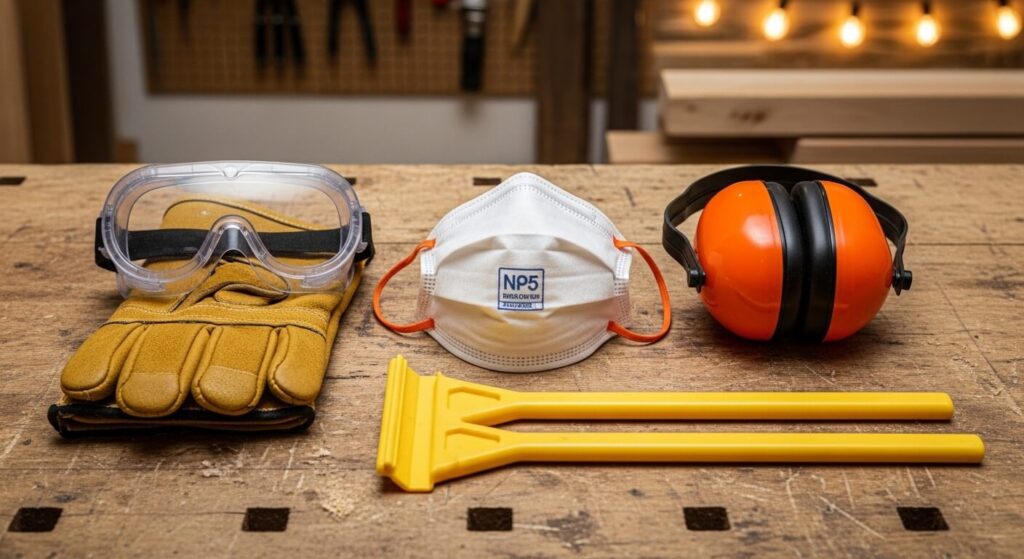
Why Safety Gear Is Essential in a Small Woodworking Workshop?
Small woodworking spaces present unique challenges. Unlike large professional shops, small workshops often have limited airflow, tighter tool placement, and less room to move safely.
Statistics highlight just how important safety gear is for small woodworking workshops. Research shows that woodworking equipment contributes to around 720,000 injuries annually, many involving severe hand damage or amputations. Amateur woodworkers account for over 60% of these injuries, which means hobbyists working in small workshops are particularly at risk. [Source: ICW]
Small workshops—especially those in garages, basements, or compact studios—often amplify these risks. Limited space can lead to clutter, poor ventilation, and reduced maneuverability around machines. When tools like table saws, routers, and planers are packed into tight quarters, the margin for error shrinks dramatically.
Here are some common hazards found in small workshops:
1. Wood Dust Accumulation
Fine wood dust is one of the biggest hazards in woodworking. It can irritate your lungs, cause allergies, and lead to long-term respiratory problems if inhaled regularly.
2. Flying Debris
Cutting, sanding, or drilling wood often produces small chips that can easily enter your eyes.
3. Loud Power Tools
Tools like table saws, routers, and planers produce high noise levels that can damage your hearing over time.
4. Limited Workspace
In a small shop, tools and materials are often closer together. This increases the chances of accidental contact with sharp blades or moving parts.
Because of these risks, wearing proper woodworking protective equipment is essential to stay safe and comfortable.
Common Woodworking Injuries and Risks
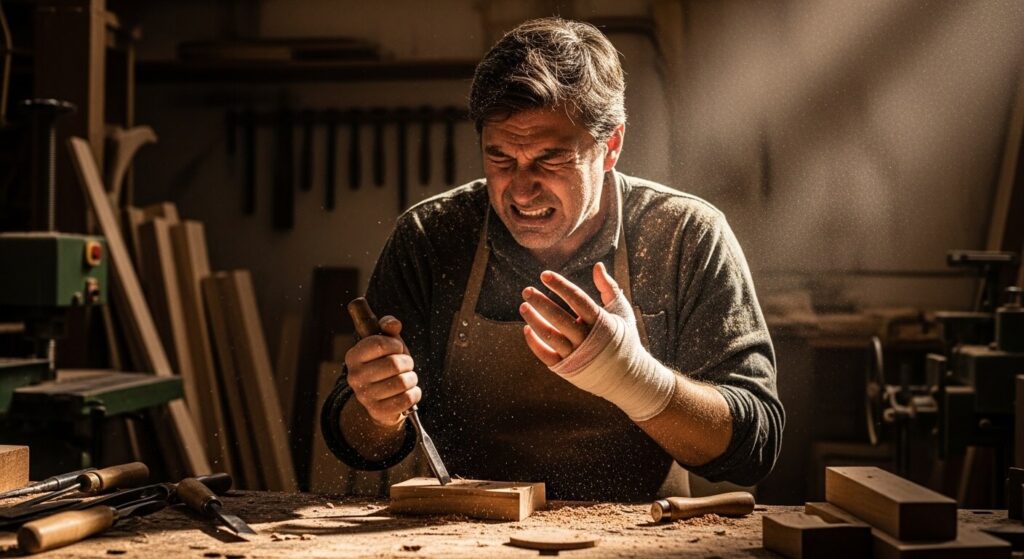
Woodworking injuries come in many forms, ranging from minor splinters to catastrophic accidents. The most common injuries include cuts, lacerations, crushed fingers, eye injuries, hearing damage, and respiratory problems caused by wood dust.
Among woodworking machines, table saws alone account for tens of thousands of injuries every year, making them one of the most dangerous tools in a shop. [Source: accident-prevention.com]
Sharp blades spinning at thousands of revolutions per minute can cause devastating injuries in milliseconds. A kickback—a sudden and violent ejection of wood from a machine—can strike operators with surprising force. Flying chips and dust particles can damage the eyes, while prolonged exposure to loud machinery can cause irreversible hearing loss.
Dust exposure is another often overlooked risk. Wood dust, especially from hardwoods and engineered materials, can irritate the lungs and even contribute to long-term respiratory diseases. In confined workshops, dust accumulation can also increase fire hazards.
Why Do Small Workshops Need Extra Attention to Safety?
Large professional workshops usually follow strict safety protocols and maintain industrial ventilation systems. Small workshops rarely have these advantages. Instead, they rely heavily on individual awareness and proper equipment.
Limited workspace often means tools are placed closer together than ideal. This can lead to awkward cutting angles, reduced visibility, and less room to react if something goes wrong. Poor lighting or clutter can further increase accident risks.
Safety gear compensates for these limitations. A simple pair of safety glasses or a respirator mask might seem like a small investment, but it dramatically improves protection. In fact, safety experts estimate that around 80% of woodworking injuries could be prevented by using proper protective equipment such as safety glasses, gloves, and respirators.
Ultimately, safety gear transforms a small workshop from a risky environment into a controlled and professional workspace.
Understanding Personal Protective Equipment (PPE) in Woodworking
Personal Protective Equipment—often called PPE—is the collection of wearable gear designed to protect workers from hazards. In woodworking, PPE shields the body from dust, noise, debris, chemicals, and mechanical injuries.
PPE does not replace safe tool operation or proper training. Instead, it acts as a secondary barrier. Imagine operating a table saw with perfect technique but encountering an unexpected knot in the wood that causes a chip to fly toward your face. Safety glasses ensure that incident becomes a harmless surprise rather than a medical emergency.
Woodworking PPE typically falls into several categories:
- Eye and face protection
- Hearing protection
- Respiratory protection
- Hand protection
- Protective clothing and footwear
Each type addresses a different hazard found in a woodworking shop.
The Role of PPE in Preventing Accidents
The effectiveness of PPE becomes obvious when examining accident reports. Many serious woodworking injuries occur because workers skip basic safety gear. Sometimes this happens out of convenience—people assume a quick cut doesn’t require goggles or ear protection.
That mindset is dangerous. Woodworking machines don’t distinguish between a five-minute job and a five-hour project. A router spinning at high speed can eject debris instantly, regardless of how short the task is.
PPE ensures consistent protection. Safety glasses prevent eye injuries caused by flying debris. Hearing protection blocks excessive noise levels from power tools. Respirators filter microscopic dust particles that would otherwise enter the lungs.
Over time, these protective measures add up. They reduce cumulative damage from repeated exposure and protect the body from sudden accidents.
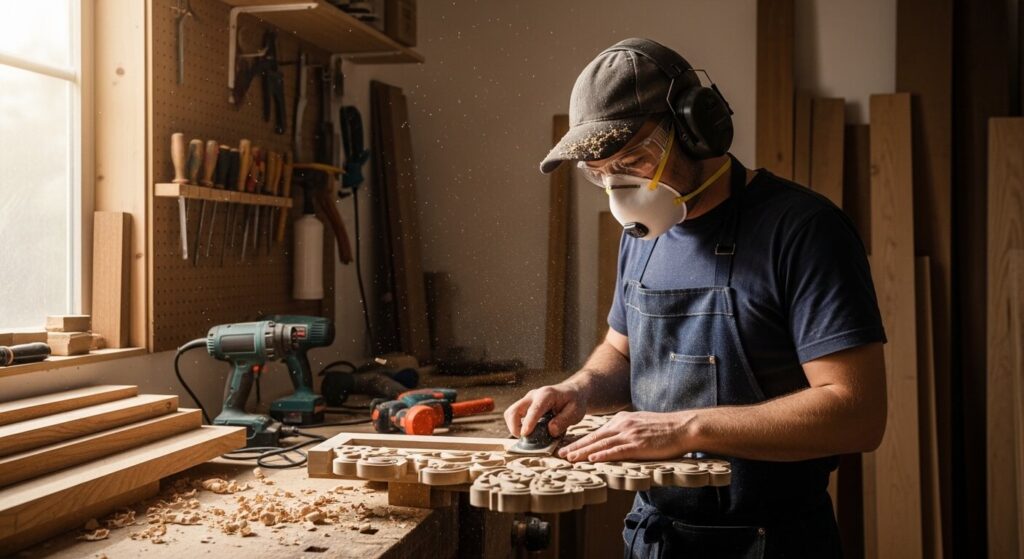
Essential Woodworking Safety Gear for Small Workshops
When setting up a small woodworking workshop, several pieces of PPE should be considered mandatory. These include eye protection, hearing protection, and respiratory masks. Additional equipment such as gloves and protective clothing provides further safety depending on the specific task.
A well-equipped workshop treats safety gear with the same importance as cutting tools. Just as you wouldn’t operate a table saw without a blade, you shouldn’t operate it without eye protection.
Safety gear isn’t just about preventing injuries—it’s about ensuring woodworking remains an enjoyable and sustainable activity for years to come.
Below are the most important safety items every woodworker should keep in a small shop.
1. Safety Glasses or Goggles
Eye protection is widely considered the most critical piece of woodworking safety gear. Woodworking operations frequently generate flying chips, sawdust, and fragments that travel at high speeds. Without protection, these particles can cause severe eye injuries in seconds.
Safety glasses are designed specifically to withstand impact and shield the eyes from debris. Unlike regular eyeglasses, they feature stronger lenses and protective side shields that block particles from entering from the sides.
Safety glasses protect your eyes from:
- Flying wood chips
- Dust particles
- Broken tool fragments
When choosing safety glasses, look for:
- Impact-resistant lenses
- Anti-fog coating
- Wraparound design for full coverage
If you frequently sand wood or cut materials that produce lots of dust, sealed safety goggles may provide better protection.
Safety Glasses vs. Goggles
Safety glasses are the most common choice for woodworking. They are lightweight, comfortable, and provide adequate protection for most tasks such as cutting, drilling, or sanding. Many modern safety glasses also include anti-fog coatings and wraparound designs that improve visibility.
Goggles provide a higher level of protection. They seal around the eyes, preventing dust and debris from entering entirely. Goggles are especially useful during heavy sanding, grinding, or when working with chemicals such as finishes and adhesives.
Both options serve important roles. Many woodworkers keep both types in their workshop and switch depending on the task.
Face Shields for High-Risk Tasks
For particularly hazardous operations—such as turning wood on a lathe or grinding metal components—a face shield adds an extra layer of protection. A face shield covers the entire face, protecting against large debris or splinters.
However, face shields should be used in addition to safety glasses, not as a replacement. Glasses protect the eyes from smaller particles that can still bypass a shield.
In a small workshop where space is limited and tools are close together, this combination of protection becomes even more important.
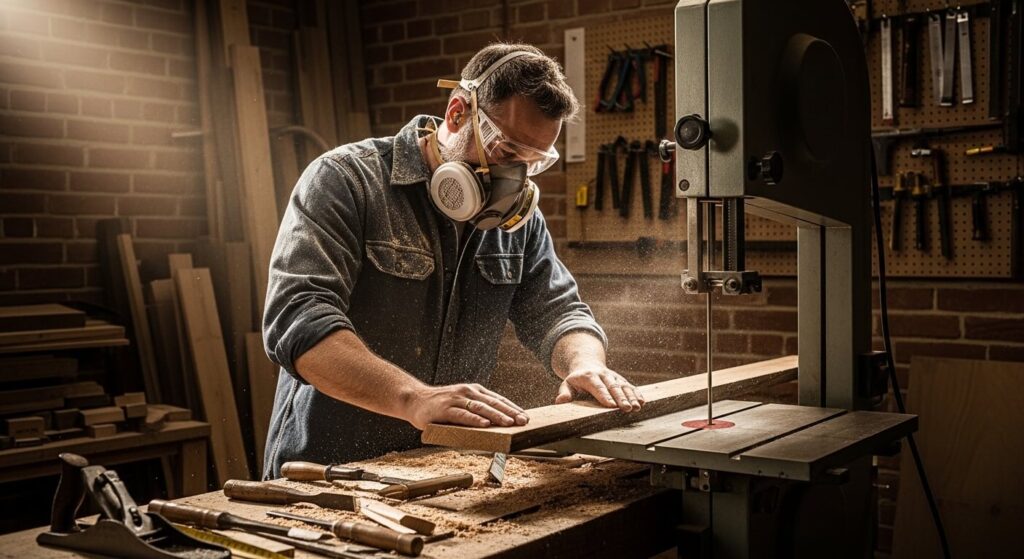
2. Dust Mask or Respirator
Wood dust may look harmless, but fine particles can easily enter your lungs and cause long-term health problems. Fine dust particles can remain suspended in the air for long periods, especially in small workshops with limited ventilation.
Breathing these particles can irritate the respiratory system and potentially lead to long-term health problems.
A dust mask or respirator helps filter out harmful particles and improves air quality while you work.
Dust Masks vs. Respirators
Dust Mask
Dust masks provide basic protection by filtering larger particles. They are suitable for light sanding or brief cutting tasks.
Best for light woodworking tasks such as:
- Hand sanding
- Small cutting jobs
- Quick projects
Respirator
Respirators provide much higher protection. They use advanced filters designed to capture microscopic particles and harmful fumes.
Serious woodworkers often use N95 or P100 respirators, which remove the vast majority of airborne particles.
Better for heavy woodworking activities like:
- Power sanding
- Routing
- Working with hardwoods or treated wood
A respirator with replaceable filters provides better protection and is recommended for frequent woodworkers.
3. Hearing Protection
Power tools in a woodworking shop are far louder than many people realize. Table saws, routers, planers, and sanders often produce noise levels exceeding safe hearing thresholds. Noise generated by woodworking tools sometimes exieds 85 decibels, which can cause permanent hearing damage with prolonged exposure.
Hearing damage is particularly dangerous because it occurs gradually. Many woodworkers do not notice the decline until significant damage has already occurred.
Common noisy tools include:
- Table saws
- Planers
- Routers
- Circular saws
Earplugs vs. Earmuffs
Two primary types of hearing protection are used in woodworking:
Earplugs
- Inserted directly into the ear canal
- Lightweight and inexpensive
- Excellent for extended use
- Affordable and disposable
Earmuffs
- More comfortable for long sessions
- Provide higher noise reduction by covering the entire ear
- Easy to put on and remove
If you regularly use power tools, hearing protection should always be part of your safety routine. Some woodworkers use both simultaneously for maximum protection when operating extremely loud tools.
Recommended Noise Reduction Ratings (NRR)
Hearing protection devices are rated using the Noise Reduction Rating (NRR) system. The higher the number, the greater the noise reduction.
For woodworking environments, many experts recommend protection rated between 25 and 33 NRR, which significantly reduces exposure to loud machinery.
By wearing hearing protection consistently, woodworkers can preserve their hearing for decades.
4. Hand Protection and Work Gloves
Hand injuries are among the most common woodworking accidents. Splinters, cuts, abrasions, and burns can occur during various tasks.
Gloves can protect the hands during material handling, sanding, and finishing operations. However, gloves should never be worn when operating rotating machinery such as table saws or drill presses because they can get caught in moving parts.
The key is using gloves strategically—when appropriate and safe.
- Splinters
- Sharp edges
- Rough materials
Use gloves when:
- Handling rough lumber
- Moving heavy boards
- Cleaning up the workshop
Remove them before operating power tools.
5. Protective Clothing and Footwear
Protective clothing may seem less critical than goggles or respirators, but it plays an important role in workshop safety.
Durable clothing protects the skin from splinters, abrasions, and chemical spills. Work aprons are especially useful because they shield clothing while providing convenient tool pockets.
Loose clothing can easily get caught in moving parts, so it’s best to wear fitted workwear.
Recommended protective clothing includes:
- Woodworking apron
- Durable work pants
- Non-slip shoes or boots
- Short sleeves or tight cuffs
Anti-Slip Shoes and Work Aprons
Foot protection is often overlooked. In woodworking shops, floors may become slippery due to sawdust or spilled finishes.
Anti-slip work shoes reduce the risk of slips and falls. Steel-toe boots provide additional protection if heavy materials are dropped.
Aprons also help to protect your clothing and keep tools within reach, reducing unnecessary movement around machinery.
Avoiding Loose Clothing Hazards
Loose clothing, jewelry, and long hair can become entangled in machinery. This can result in severe injuries if the material is pulled into moving parts.
Wearing fitted clothing and securing long hair dramatically reduces this risk.
6. First Aid Kit
Even experienced woodworkers occasionally experience small cuts or splinters. A well-stocked workshop first aid kit allows you to treat minor injuries quickly.
Essential items include:
- Bandages
- Antiseptic wipes
- Gauze pads
- Medical tape
- Tweezers for splinters
- Disposable gloves
Keep your first aid kit in an easily accessible location.
Additional Safety Equipment for Small Workshops
Besides personal protective equipment, certain tools can help prevent accidents in your workshop.
1. Push Sticks and Push Blocks
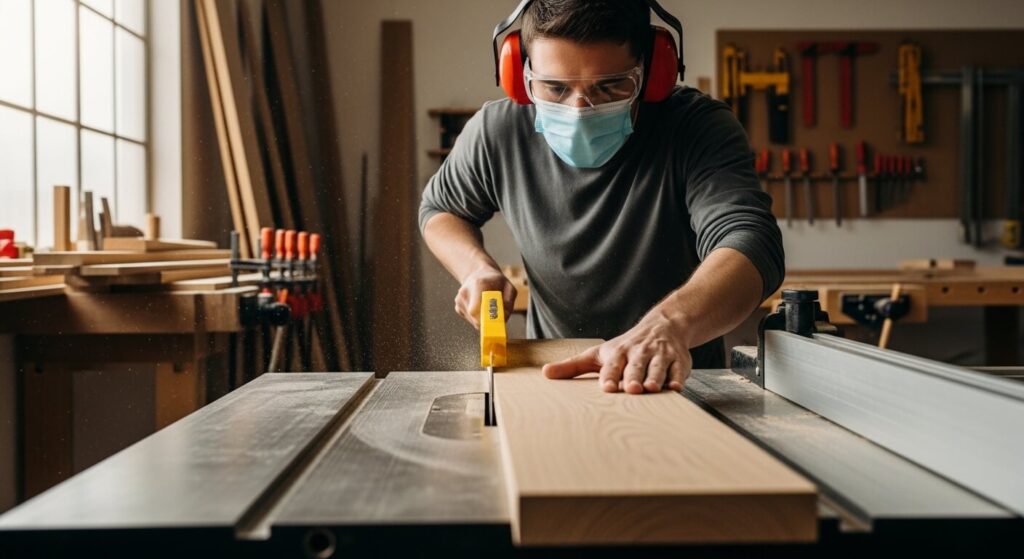
Push sticks and push blocks help keep your hands away from blades while cutting wood on a table saw or jointer.
Benefits include:
- Improved control over small pieces
- Reduced risk of hand injuries
- Safer cutting techniques
Many professional woodworkers consider push sticks essential safety tools.
2. Dust Collection System
Dust collection systems remove airborne particles and improve workshop air quality.
While respirators protect the individual, dust collection systems protect the entire workshop environment. These systems capture dust at its source, preventing it from spreading throughout the room.
Even small workshops can benefit from compact dust collectors or shop vacuum systems connected directly to tools.
Combining respirators with dust collection creates a safer and cleaner workspace.
Options for small workshops include:
- Shop vacuums with dust separators
- Portable dust collectors
- Wall-mounted dust filtration units
Good dust control not only improves safety but also keeps your shop cleaner.
3. Fire Extinguisher
Wood dust is highly combustible, especially when combined with sparks from power tools.
Every workshop should have a fire extinguisher rated for electrical and wood fires.
Place it in a visible and easily accessible area.
In addition of the above, following tools can also help you increase workshop safety:
- Featherboards
- Blade guards
- Emergency stop switches
Together, these accessories transform potentially hazardous operations into controlled processes.
Essential Woodworking Safety Gears At A Glance
Find below a comparison table of woodworking protective gears that are essential for small woodworking shop setup.
| Safety Gear | Purpose | Best For |
|---|---|---|
| Safety Glasses | Protect eyes from flying wood chips, sawdust, and debris | General cutting, drilling, routing, and sanding |
| Safety Goggles | Provide sealed eye protection against fine dust and chemical splashes | Heavy sanding, grinding, finishing, and spraying |
| Face Shield | Protect the entire face from large chips and splinters | Wood turning on a lathe, grinding, or high-speed cutting |
| Hearing Protection (Earplugs / Earmuffs) | Reduce exposure to loud power tool noise | Using table saws, routers, planers, jointers, and sanders |
| Respirator (N95 / P100) | Filter harmful airborne wood dust and fine particles | Sanding, cutting MDF/plywood, and working with treated wood |
| Dust Mask | Provide basic filtration against larger dust particles | Light sanding and short woodworking tasks |
| Work Gloves | Protect hands from splinters, abrasions, and minor cuts | Handling rough lumber, material transport, and cleanup |
| Push Stick / Push Block | Keep hands safely away from cutting blades | Table saw, jointer, and router table operations |
| Featherboard | Hold wood firmly against fences and tables to prevent kickback | Table saws, router tables, and band saws |
| Work Apron | Protect clothing and provide storage for tools | General woodworking tasks and assembly work |
| Anti-Slip Work Shoes | Improve traction and protect feet from falling objects | Workshops with sawdust-covered floors or heavy materials |
| Dust Collection System / Shop Vacuum | Remove dust from tools and air to improve air quality | Continuous cutting, sanding, and small workshop environments |
Small Workshop Safety Tips
Besides wearing protective gear, following good safety practices can significantly reduce the risk of accidents.
- Keep the Floor Clean: Sawdust, wood scraps, and tools on the floor can cause slips and falls.
- Ensure Proper Lighting: Good lighting helps you see cutting lines clearly and reduces mistakes.
- Maintain Your Tools: Sharp tools are safer than dull ones because they require less force and provide better control.
- Use Proper Ventilation: Open windows or install fans to improve airflow and reduce dust buildup.
- Stay Focused: Avoid distractions when using power tools. Even a brief moment of inattention can lead to accidents.
Woodworking Safety Gear Checklist for Small Workshops
Use this checklist to make sure your workshop is properly equipped.
✔ Safety glasses or goggles
✔ Dust mask or respirator
✔ Hearing protection
✔ Work gloves
✔ Protective clothing or apron
✔ First aid kit
✔ Push sticks or push blocks
✔ Dust collection system
✔ Fire extinguisher
Keeping these items in your workshop will greatly improve safety.
Common Woodworking Safety Mistakes to Avoid
Even experienced woodworkers sometimes overlook basic safety precautions.
- Ignoring Dust Protection: Breathing wood dust over time can cause serious respiratory issues.
- Wearing Loose Clothing: Loose sleeves, jewelry, or long hair can become caught in machines.
- Skipping Eye Protection: Many injuries happen when woodworkers assume a quick cut is safe without glasses.
- Using Dull Tools: Dull blades increase the chance of kickback and loss of control.
Avoiding these mistakes will help create a safer working environment.
How to Choose the Best Safety Gear for Your Small Workshop?
When selecting woodworking safety equipment, consider the following factors.
- Comfort: Comfortable gear is more likely to be worn consistently.
- Safety Certifications: Look for equipment certified by recognized safety standards such as ANSI or NIOSH.
- Durability: Quality safety gear lasts longer and provides better protection.
- Budget: Safety equipment does not have to be expensive, but it should always meet proper safety standards.
Selecting the right safety gear sometimes depends on the type of woodworking performed and the size of the workspace.
If you’re a beginner, you should focus on the essentials:
- Safety glasses
- Hearing protection
- Respirator or dust mask
These three items alone dramatically reduce the most common risks.
Budget-Friendly Safety Gear for Beginners
Safety equipment does not need to be expensive. Many reliable options are affordable and widely available.
| Safety Gear | Typical Cost | Purpose |
|---|---|---|
| Safety glasses | $10–$20 | Protect eyes from debris |
| Ear protection | $15–$40 | Reduce tool noise |
| Respirator mask | $20–$60 | Filter dust particles |
| Work apron | $20–$50 | Protect clothing and store tools |
Investing in reliable safety gear is one of the best decisions you can make as a woodworker.
Maintaining and Replacing Safety Equipment
Safety gear must be maintained to remain effective. Scratched safety glasses reduce visibility, worn earplugs lose effectiveness, and clogged respirator filters stop filtering properly.
Regular inspections ensure equipment remains reliable.
Cleaning safety gear after each workshop session also extends its lifespan. Dust and debris can accumulate quickly, especially in woodworking environments.
Replacing worn equipment promptly is essential for continued protection.
Creating a Safety-First Culture in Small Workshops
Safety culture begins with habits. Woodworkers who consistently wear protective gear create routines that reduce risk automatically.
Start every project by checking safety equipment. Keep goggles, respirators, and hearing protection within easy reach so there is no temptation to skip them.
Over time, these habits become second nature.
Woodworking should be creative, rewarding, and enjoyable—not dangerous. By prioritizing safety gear and responsible practices, even the smallest workshop can operate like a professional environment.
Conclusion
A safe workshop is the foundation of successful woodworking. Whether you are a beginner or an experienced craftsman, using the right woodworking safety gear for small workshops can protect you from injuries and long-term health risks.
Simple items like safety glasses, respirators, hearing protection, and push sticks can make a huge difference in preventing accidents.
By equipping your shop with the proper safety gear and following good workshop practices, you can enjoy woodworking while staying safe and productive.
FAQs: Woodworking Safety Gear for Small Workshops
What safety gear is essential for woodworking?
Essential woodworking safety gear includes safety glasses, a dust mask or respirator, hearing protection, gloves, protective clothing, and a first aid kit.
Do I need a respirator for woodworking?
Yes, a respirator is recommended when woodworking, especially during sanding or cutting operations that produce fine dust particles.
What PPE should beginner woodworkers use?
Beginner woodworkers should use basic PPE such as safety glasses, hearing protection, a dust mask, and protective clothing.
Are gloves safe when using power tools?
Gloves can protect hands when handling lumber, but they should not be worn when operating spinning power tools because they can get caught in the machinery.
How do I protect my lungs from wood dust?
You can protect your lungs from wood dust by wearing a respirator or dust mask and using a dust collection system to remove airborne particles.
Recent Posts
Dust Mask vs Respirator for Woodworking: Which One Do You Really Need?
Woodworking is rewarding, creative, and therapeutic—but it also exposes you to wood dust, fine particles, and harmful airborne contaminants that can seriously affect your health. If you’ve ever...
How to Stay Safe in a Woodworking Shop: Essential Power Tips & Proven Safety Rules
Learning how to stay safe in a woodworking shop is not optional—it’s fundamental. Woodworking combines sharp tools, fast-moving blades, heavy materials, and fine dust, all of which create a...