

Nail guns have transformed the way professionals and DIY enthusiasts work, replacing the traditional hammer and nail with speed, precision, and power. Among the most popular options are cordless nailers and pneumatic (air-powered) nailers, each offering unique advantages depending on the job. As technology continues to advance, the cordless vs pneumatic nailer debate has become more relevant than ever. Choosing the right tool can greatly impact your productivity, comfort, and budget.
In this guide, we’ll break down the key differences, pros, and cons of each type so you can confidently decide which nailer best fits your needs.
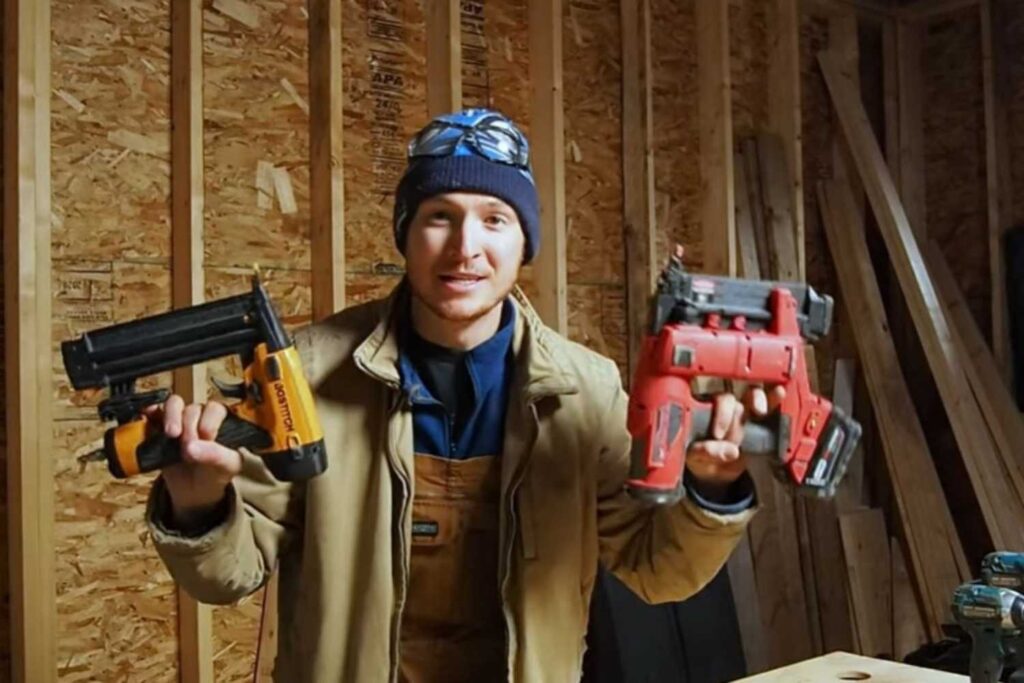
What Are Cordless Nailers?
Cordless nailers, as the name suggests, operate without air hoses or compressors. These modern tools rely on battery power, usually lithium-ion, to drive nails efficiently.
They’re ideal for jobs where mobility and setup time are critical — such as framing, trim work, or home renovation.
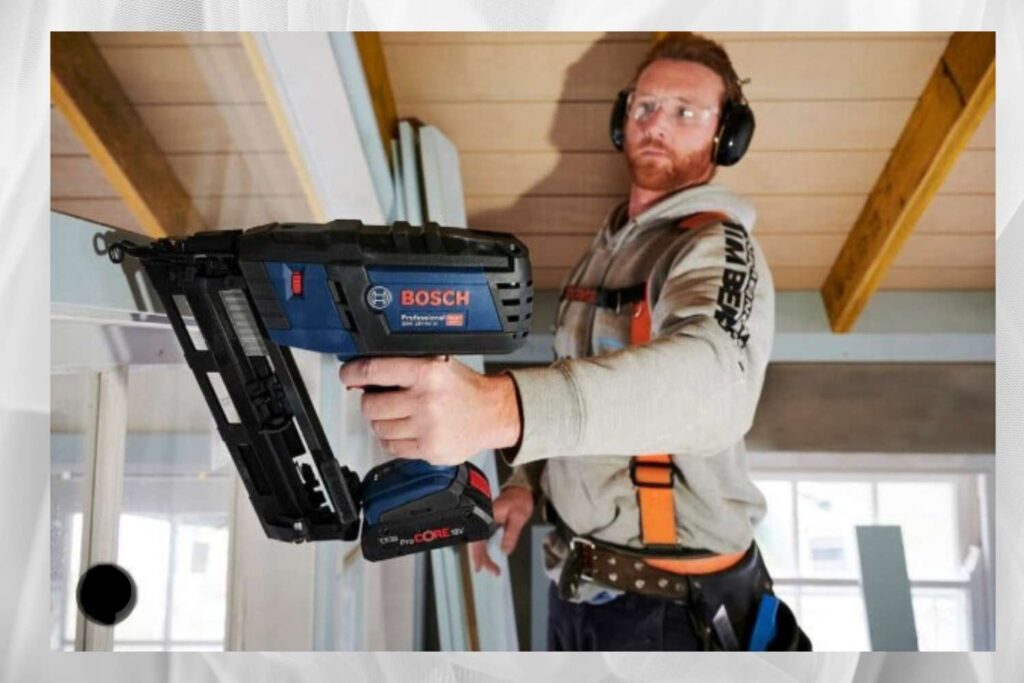
How Do Cordless Nailers Work?
Cordless nailers use either:
- Fuel cell combustion systems (mixing fuel and air to create pressure)
- Or pure battery-driven mechanisms (using electric motors and flywheels).
When you press the trigger, the motor or combustion mechanism releases energy that drives the nail into the surface.
This design eliminates the need for compressors or hoses, offering freedom and convenience.
Read More On: How Does a Cordless Nailer Works?
Types of Cordless Nailers
There are three primary cordless nailer types:
- Battery-Powered Nailers – Use a rechargeable lithium-ion battery. Example: DEWALT 20V MAX XR Framing Nailer
- Fuel-Powered Nailers – Use gas cartridges for additional force. Example: Paslode Cordless XP Framing Nailer
- Hybrid Nailers – Combine both for enhanced power and endurance.
Cordless models are becoming more popular due to improvements in battery efficiency, lightweight design, and runtime.
What Are Pneumatic Nailers?
Pneumatic nailers are the traditional powerhouse of construction tools. They operate by connecting to an air compressor, which delivers pressurized air through a hose to drive nails with immense force.
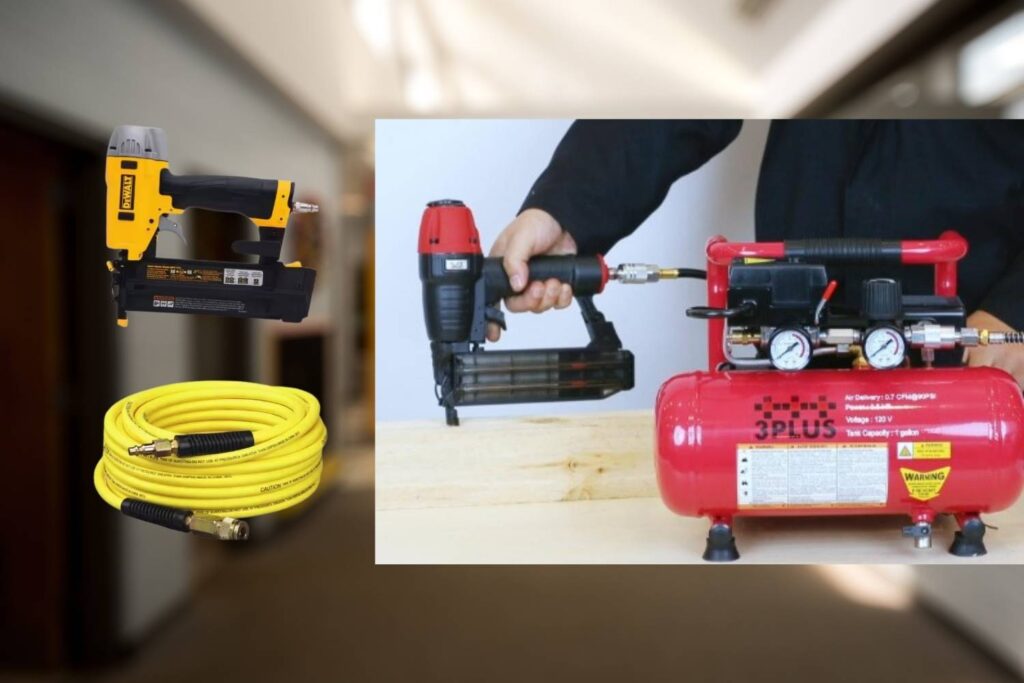
How Do Pneumatic Nailers Work?
These tools rely on an air compressor that stores compressed air in a tank. When you pull the trigger, the compressed air releases through a valve, propelling the nail at high speed into the workpiece.
This system is renowned for power, reliability, and speed, making it the go-to for professional framing, roofing, and industrial use.
Read More On: How Does A Pneumatic Nail Gun Work?
Types of Pneumatic Nailers
- Framing Nailers – Designed for heavy-duty construction. Example: NuMax SFR2190 Pneumatic Framing Nailer
- Brad Nailers – Ideal for finishing work and smaller trims. Example: WEN 18-Gauge Pneumatic Brad Nailer
- Finish Nailers – Balance precision with power. Example: Metabo HPT Pneumatic Finish Nailer
- Roofing Nailers – Optimized for high-volume nailing on shingles or sheathing. Example: BOSTITCH Coil Roofing Nailer
Cordless vs Pneumatic Nailers: Detailed Comparison
Let’s explore the 10 key differences between cordless and pneumatic nailers in detail.
1. Power and Performance
- Cordless: Relies on battery or fuel. Some cordless models (especially older or cheaper ones) exhibit a small delay (e.g., flywheel or motor spin-up) before nail drives. However, modern versions offer near-pneumatic power.
- Pneumatic: Runs on compressed air, delivering consistent and strong force. They can fire nails very fast; there is almost no delay between trigger pull and nail drive.
If you’re doing high-volume work (e.g., siding, roofing, framing many nails), pneumatic still often holds the edge.
✅ Winner: Pneumatic — Superior power consistency for heavy-duty work.
2. Portability and Mobility
- Cordless: 100% mobile. No cords or hoses to limit movement. Just grab the gun, load it, and you’re ready. According to one test, a cordless nailer took about 30 seconds from pickup to first nail vs around 6 minutes for the pneumatic setup. (Info source: Pro Tool Reviews)
- Pneumatic: Requires compressor setup, air hose reel out, and pressure checking that reduces mobility.
If you move around a lot (up ladders, around a house), cordless means fewer cables/hose to contend with.
✅ Winner: Cordless — Ideal for tight spaces and quick setups.
3. Maintenance and Durability
- Cordless: Cordless nailers remove the hose/compressor hassle but add electronics, motors, and battery lifecycle issues. Some users report more service than pneumatic over the long term.
- Pneumatic: Mechanically simpler in the gun itself but relies on compressor/hose fittings/oiling, etc. It requires oiling, hose inspection, and compressor upkeep.
✅ Winner: Tie — Cordless offers convenience; pneumatic lasts longer with care.
4. Cost and Value for Money
- Pneumatic: You need the air compressor, hose, and the nailer(s). The compressor may be a significant cost if you don’t already own one.
- Cordless: You may already own a battery platform (e.g., 18 V tools), so adding a cordless nailer makes sense. But batteries and chargers cost, and the tool itself may cost more.
One article states: “If you can afford it — both. … but pneumatic solutions cost less” for many larger projects. (Info source: Pro Tool Reviews)
| Type | Initial Cost | Maintenance Cost | Long-Term Value |
|---|---|---|---|
| Cordless | High | Low | Moderate |
| Pneumatic | Low | Moderate | High |
✅ Winner: Pneumatic — Cheaper upfront and great long-term reliability.
5. Noise and Safety Factors
Cordless nailers are quieter, safer, and better for indoor projects. Pneumatic tools, while powerful, can be noisy and require more safety precautions.
✅ Winner: Cordless
6. Application and Use Cases
- Cordless: Best for trim, molding, DIY, and light construction.
- Pneumatic: Perfect for framing, decking, roofing, and large-scale jobs.
✅ Winner: Depends on Task
7. Speed and Efficiency
Pneumatic nailers have faster cycle times, making them ideal for repetitive, high-volume work. Cordless tools are improving but still lag slightly in continuous operation.
✅ Winner: Pneumatic
8. Weight and Ergonomics
Cordless nailers are slightly heavier due to batteries but easier to handle without hoses. Pneumatic nailers are lighter but tethered to hoses, limiting flexibility.
The ideal “feel” will depend on your job: stand-on-scaffold vs shop bench vs above-head trims.
✅ Winner: Cordless
9. Battery Life vs Air Supply
Cordless tools need recharging after 400–1,000 nails. Pneumatic systems run indefinitely as long as the compressor is on.
✅ Winner: Pneumatic
10. Environmental Considerations
Cordless nailers are more energy-efficient and eco-friendly compared to fuel-cell pneumatic tools, especially when powered by rechargeable batteries.
✅ Winner: Cordless
Pros and Cons Summary Table
| Feature | Cordless Nailers | Pneumatic Nailers |
|---|---|---|
| Power | Moderate to High | Very High |
| Portability | Excellent | Limited |
| Maintenance | Low | Moderate |
| Cost | Higher | Lower |
| Noise | Low | High |
| Setup Time | Minimal | Longer |
| Durability | Moderate | High |
| Ideal For | DIY & Mobility | Heavy-duty tasks |
Electric vs Pneumatic Nailer: What’s the Difference?
Electric nailers use electricity — either from a corded power source or a rechargeable battery — to drive nails. They’re lightweight, easy to set up, and great for small to medium DIY projects since they don’t require an air compressor.
Pneumatic nailers, on the other hand, run on compressed air, delivering stronger, faster, and more consistent power, which makes them ideal for professional and high-volume work. However, they require a compressor and hose, which can limit mobility.
In short:
- Choose electric for convenience and portability.
- Choose pneumatic for power, speed, and long-term durability.
Milwaukee Framing Nailer vs Pneumatic
Here’s a concise comparison between the Milwaukee M18 FUEL cordless framing nailer and a traditional pneumatic framing nailer:
✅ Milwaukee M18 FUEL (Cordless)
- Uses a battery (M18 platform) and a nitrogen-spring mechanism instead of a hose & compressor.
- Fires up to ~3 nails per second with “zero ramp-up time”.
- Designed for cordless mobility: no compressor, no hose, no gas cartridges.
Trade-offs: Slightly heavier tool due to battery & internal mechanism; higher upfront cost if you don’t already have the battery platform.
🛠 Pneumatic Framing Nailer
- Powered by compressed air via an air compressor + hose.
- Generally lighter gun weight (since motor and compressor are separate) and very consistent power output for large volume/heavy-duty jobs.
Downsides: You’re tethered by hose/compressor (less mobility), and there’s more setup/maintenance (compressor, hose, fittings).
🎯 Which to Choose?
- If you value mobility, frequently move around job-sites (ladders, roofs, remote areas), or already have the Milwaukee battery ecosystem, the cordless M18 FUEL is a strong contender.
- If you do heavy framing work, high nail volumes, have a compressor system in place, or prioritize the lightest gun weight and extreme consistency, a pneumatic framing nailer may still be the better choice.
Expert Tips: Choosing Between Cordless and Pneumatic Nailers
- For DIYers and remodelers, cordless models save time and space.
- For professionals, pneumatic nailers deliver consistent performance for long shifts.
- Check nail compatibility—not all nails fit both systems.
- Invest in quality brands like DEWALT, Makita, or BOSTITCH for long-term reliability.
- Prioritize safety features such as trigger locks and anti-dry fire mechanisms.
🔗 Learn more about safe nail gun usage from OSHA’s Nail Gun Safety Guide.
Here’s a simple decision-tree-style guide to help:
- Do you already own a battery-tool ecosystem and value mobility? → Lean cordless.
- Are you working on one site, many nails, and have/have access to a compressor? → Lean pneumatic.
- Need the lightest gun for overhead/in-tight-spaces work? → Pneumatic may win on weight.
- Want the convenience of plug-and-play, grab-a-battery tool? → Cordless is attractive.
- Budget constrained and don’t want to invest in compressor & hose? → Cordless may make more sense.
- Doing structural or very high-output nailing (framing, siding)? → Pneumatic still strong.
- DIY handyman doing occasional trim or finish work? → Cordless often the easiest choice.
In many professional toolkits, you’ll actually find both: pneumatic for heavy-duty work and cordless for convenience and portability. One review noted: “We still recommend pneumatic nailers for larger projects … but you will get to the meat of the punch list and project work much more quickly with a battery-powered cordless nailer.”
FAQs: Cordless vs Pneumatic Nailers
1. Which is better: Cordless or Pneumatic Nailers?
It depends on your needs. Cordless nailers offer portability, while pneumatic nailers provide superior power and endurance.
2. Can cordless nailers replace pneumatic nailers completely?
Not entirely. Cordless versions are improving but still can’t match the continuous power of pneumatic tools in industrial environments.
3. How long does a cordless nailer battery last?
On average, 2–4 hours or 400–1,000 nails per charge depending on model and usage.
4. Are pneumatic nailers more durable?
Yes. With proper maintenance, pneumatic nailers can last decades.
5. Do cordless nailers require maintenance?
Minimal maintenance — just battery care and occasional cleaning.
6. Can I use the same nails in both types?
Usually not. Each model has specific nail types and sizes.
7. What is the downside of a cordless nailer?
Heavier gun due to battery, cost of batteries, potential delay or slower cycle for some models, limited runtime depending on battery.
8. What’s the downside of a pneumatic nailer?
You’re tethered by a hose/compressor, there’s more setup time, you need compressor infrastructure, and it’s more cumbersome in mobile-work scenarios.
Conclusion
The Cordless vs Pneumatic Nailers debate isn’t about which is superior—it’s about which suits your workflow best.
If you value mobility, convenience, and ease, choose cordless.
If you prioritize raw power, speed, and durability, pneumatic is your go-to.
Whatever you pick, ensure it aligns with your project size, workspace, and budget. With the right tool, you’ll not only save time but elevate your craftsmanship to the next level.
Recent Posts
Woodworking is one of the most rewarding hobbies and professions, but it also comes with serious risks if proper precautions are not taken. Whether you're working with a table saw, planer, or simple...
What to Use If You Don't Have a Brad Nailer: Handy Alternatives
You can use a hammer and finishing nails paring with nail set or wood glue if you don't have a Brad Nailer. These tools effectively secure trim and small woodworking projects. So, if you’re in...